
Priorit PRIOPACK-T transport and storage box Plastic container for lithium-ion batteries


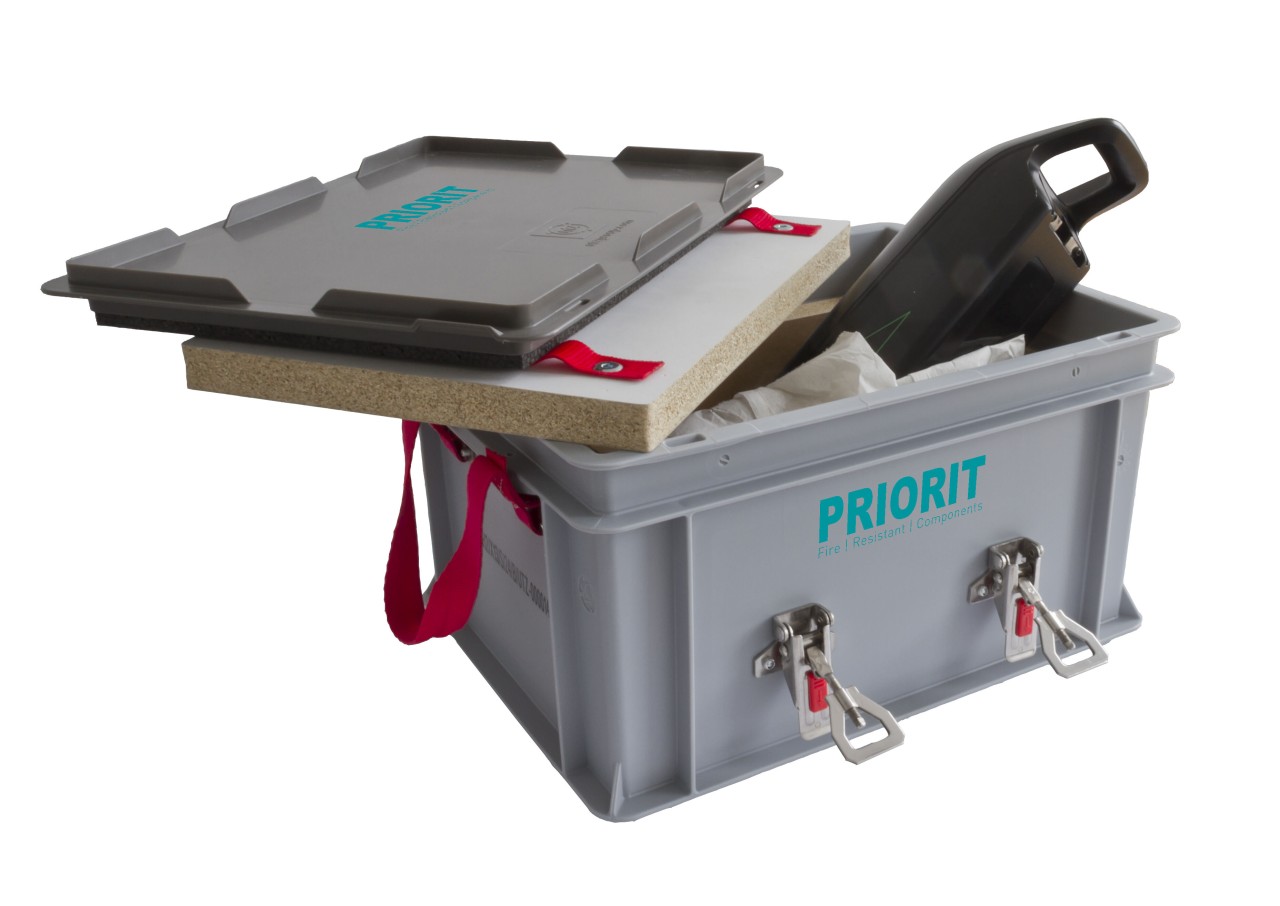


- External dimensions: 600 × 400 × 235 mm
- Internal dimensions: 507 × 308 × 144 mm
- Without filling material
- Also suitable for defective lithium-ion batteries
Do you have some questions about this product?
- Your personal contact person
- Name: Petra Fürbeck
- E-Mail: info@lion-care.com
- Phone: +49 (0) 7151 - 256 4817
Technical data
| ADR special provision: | SV 310, SV 376, SV 377 |
|---|---|
| Areas of application: | E-Bike batteries, Garden tool batteries, Loose cells, Power tool batteries |
| Battery status: | New |
| Encoding: | 4H2 |
| Filling material: | Without filler material |
| Internal dimensions (mm): | 507 x 308 x 144 |
| Material: | Plastic |
| Material designation: | Polypropylene (PP) |
| Max. gross weight (kg): | 30 |
| Outer dimensions (mm): | 600 x 400 x 235 |
| Packaging group: | I, II and III |
| Packaging instruction according to ADR: | P 903, P 908, P 909, P 910 |
| Suitable for critically defective?: | No |
| Tipping weight (kg): | 12,4 |
Product information „Priorit PRIOPACK-T transport and storage box“
Overview
The Priorit PRIOPACK-T Transport and Storage Box has been developed for the safe transport and storage of defective or damaged lithium-ion batteries. It is specifically designed for batteries with an increased fire risk and helps companies ensure safe in-house handling and compliant transport of dangerous goods in accordance with applicable regulations.
The transport container is manufactured from robust polypropylene (PP) and features a non-combustible thermal insulation lining. When used together with the appropriate filling material, the batteries are completely enclosed, mechanically protected, and thermally separated from one another. At the same time, any leaking electrolyte can be absorbed, helping to minimise the risk and spread of thermal runaway.
For safe handling during transport, the box is equipped with a tightly fitting removable lid, locking hooks with tension latches, and textile carrying handles on both sides. Its stackable design enables space-saving storage and efficient transportation of multiple containers.
Scope of Supply
- PRIOPACK-T Transport and Storage Box
- Lid with locking hooks and tension latches
- Two textile carrying straps
- Fire-resistant internal lining
- Vermiculite filling material available as an optional accessory
Technical Data
- External dimensions (W × H × D): 600 × 400 × 235 mm
- Internal dimensions (W × H × D): 507 × 308 × 144 mm
- Internal volume: 22.5 l
- Empty weight: 12.4 kg
- Maximum gross weight: 30 kg
- Maximum payload (dangerous goods + filling material): 17.6 kg
- Material: Polypropylene (PP)
- Packing Group: I, II and III
- UN approval: UN 4H2/X13/S/yy/B/UTZ-000014
- ADR/Packaging Instructions: P903, P908, P909 and P910
- Stackable: Yes
- Closure system: Locking hooks with tension latches
- Handles: 2 textile carrying handles
- Lid: Removable
- Stacking edges: Yes
Applications
The PRIOPACK-T Transport and Storage Box is particularly suitable for:
- Transport of defective lithium-ion batteries
- Safe temporary storage of damaged batteries
- Workshops and service centres
- Industrial and manufacturing facilities
- Battery retailers and take-back schemes
- Recycling and waste management companies
- Logistics providers and dangerous goods transport
Approvals & Standards
The PRIOPACK-T Transport and Storage Box complies with the requirements for transporting lithium batteries as dangerous goods in accordance with:
- UN Packaging Code 4H2
- Packing Groups I, II and III
- Packaging Instructions P903, P908, P909 and P910
- ADR Special Provisions SV 310, SV 376 and SV 377
Important Notes
For safe use of the PRIOPACK-T Transport and Storage Box, the appropriate vermiculite-based filling and insulating material is required. This material completely surrounds the lithium-ion batteries, minimises movement inside the container, and is capable of absorbing leaking electrolyte. The required quantity depends on the size of the box and the dimensions of the batteries being transported.
The transport box is intended for defective or damaged lithium-ion batteries. It is not suitable for critically defective batteries. Use must always comply with the applicable dangerous goods regulations and the relevant packaging instructions.
Conclusion
As the use of lithium-ion batteries continues to grow, so do the requirements for their safe storage and compliant transportation. The PRIOPACK-T Transport and Storage Box enables companies to safely store damaged batteries temporarily or transport them for recycling in accordance with current dangerous goods regulations. Thanks to its fire-resistant construction, UN certification, and availability in various sizes, the system can be easily integrated into existing safety and logistics processes.
| ADR special provision: | SV 310, SV 376, SV 377 |
|---|---|
| Areas of application: | E-Bike batteries, Garden tool batteries, Loose cells, Power tool batteries |
| Battery status: | New |
| Encoding: | 4H2 |
| Filling material: | Without filler material |
| Internal dimensions (mm): | 507 x 308 x 144 |
| Material: | Plastic |
| Material designation: | Polypropylene (PP) |
| Max. gross weight (kg): | 30 |
| Outer dimensions (mm): | 600 x 400 x 235 |
| Packaging group: | I, II and III |
| Packaging instruction according to ADR: | P 903, P 908, P 909, P 910 |
| Suitable for critically defective?: | No |
| Tipping weight (kg): | 12,4 |
Downloads
FAQ
That depends on various factors that need to be considered:
- size of the battery(ies)
- condition (e.g. non-critical, defective, critically defective or prototype)
- power
Transport boxes are available in many different sizes and specifications. The packaging group for which the box is suitable is indicated for each product.
Find out more in our blog article:
https://www.lion-care.com/aktuelles/blog/transportvorschriften-regeln-und-sicherheitsmassnahmen
Even if the batteries are not critical, remember to protect them from shocks and to order appropriate filling material if it is not already included in the box.
Yes. Should a battery reach a critical state and cause a fire, separating the batteries will prevent the fire from spreading and multiplying.
Generally, the insulation and protection material should line all sides of the container. The batteries are stored between individual layers.
We also have containers in our program that already have the protective material integrated into the outer wall. No further protective layer is necessary here.
The technical principles for storage and transportation solutions are very similar. The transport boxes are also subjected to extensive tests in accordance with ADR (drop test, fire test, etc.) to confirm compliance with the ADR regulations. The packaging regulations are extensive and regulated by law.
There are currently no comparable regulations for storage. Nevertheless, manufacturers of storage boxes regularly carry out appropriate tests.
The right container depends on the type and size of the battery to be shipped or stored.
If you want to learn more about battery storage and transportation, you will find the answers in our blog articles:
https://www.lion-care.com/aktuelles/blog/transportvorschriften-regeln-und-sicherheitsmassnahmen
https://www.lion-care.com/aktuelles/blog/lithium-ionen-akkus-sicherer-umgang-und-richtige-lagerung
The transportation of batteries is subject to ADR regulations.
The number, size and weight, energy density and condition of the batteries are crucial parameters for finding a suitable transport container for lithium-ion batteries. The selection process is complex and should be carried out by appropriately trained personnel. We have a trained hazardous materials officer on our team. Please feel free to contact us.
Plastic containers are cheaper but not as durable as metal containers. They are suitable, for example, for non-critical batteries, defective batteries, prototypes and end-of-life batteries. They can be used for both storage and transportation.
Metal containers are required, for example, when dealing with critically defective batteries.
The exact packaging instructions for these cases can be found in the ADR or by consulting a certified hazardous materials specialist.
To date, there are no legal requirements for the storage of lithium-ion batteries, which does not mean that they should be stored without suitable protective measures.
It is best to check with your insurer to find out which measures they recognize as suitable in the event of a claim.
For example, a suitable box could already be recognized as spatial separation.
A rough overview can be found in this VDS publication from the GDV:
https://shop. vds.de/download/vds-3103/ccb1d439-ad9d-47cb-a2b1-ace23e155610
Please also read our blog article on this topic:
https://www.lion-care.com/aktuelles/blog/lithium-ionen-akkus-sicherer-umgang-und-richtige-lagerung
That depends on various factors that need to be considered:
- size of the battery(ies)
- condition (e.g. non-critical, defective, critically defective or prototype)
- power
Transport boxes are available in many different sizes and specifications. The packaging group for which the box is suitable is indicated for each product.
Find out more in our blog article:
https://www.lion-care.com/aktuelles/blog/transportvorschriften-regeln-und-sicherheitsmassnahmen
Even if the batteries are not critical, remember to protect them from shocks and to order appropriate filling material if it is not already included in the box.
Yes. Should a battery reach a critical state and cause a fire, separating the batteries will prevent the fire from spreading and multiplying.
Generally, the insulation and protection material should line all sides of the container. The batteries are stored between individual layers.
We also have containers in our program that already have the protective material integrated into the outer wall. No further protective layer is necessary here.
The technical principles for storage and transportation solutions are very similar. The transport boxes are also subjected to extensive tests in accordance with ADR (drop test, fire test, etc.) to confirm compliance with the ADR regulations. The packaging regulations are extensive and regulated by law.
There are currently no comparable regulations for storage. Nevertheless, manufacturers of storage boxes regularly carry out appropriate tests.
The right container depends on the type and size of the battery to be shipped or stored.
If you want to learn more about battery storage and transportation, you will find the answers in our blog articles:
https://www.lion-care.com/aktuelles/blog/transportvorschriften-regeln-und-sicherheitsmassnahmen
https://www.lion-care.com/aktuelles/blog/lithium-ionen-akkus-sicherer-umgang-und-richtige-lagerung
The transportation of batteries is subject to ADR regulations.
The number, size and weight, energy density and condition of the batteries are crucial parameters for finding a suitable transport container for lithium-ion batteries. The selection process is complex and should be carried out by appropriately trained personnel. We have a trained hazardous materials officer on our team. Please feel free to contact us.
Plastic containers are cheaper but not as durable as metal containers. They are suitable, for example, for non-critical batteries, defective batteries, prototypes and end-of-life batteries. They can be used for both storage and transportation.
Metal containers are required, for example, when dealing with critically defective batteries.
The exact packaging instructions for these cases can be found in the ADR or by consulting a certified hazardous materials specialist.
To date, there are no legal requirements for the storage of lithium-ion batteries, which does not mean that they should be stored without suitable protective measures.
It is best to check with your insurer to find out which measures they recognize as suitable in the event of a claim.
For example, a suitable box could already be recognized as spatial separation.
A rough overview can be found in this VDS publication from the GDV:
https://shop. vds.de/download/vds-3103/ccb1d439-ad9d-47cb-a2b1-ace23e155610
Please also read our blog article on this topic:
https://www.lion-care.com/aktuelles/blog/lithium-ionen-akkus-sicherer-umgang-und-richtige-lagerung