
BUNCKER® Transport and Storage Container Pro Line Heavy Steel container for lithium-ion batteries


- Also for critically defective batteries
- No filling material required
- Available in 5 sizes
Do you have some questions about this product?
- Your personal contact person
- Name: Petra Fürbeck
- E-Mail: info@lion-care.com
- Phone: +49 (0) 7151 - 256 4817
Technical data
| ADR special provision: | SV 376 |
|---|---|
| Areas of application: | Automotive, External storage, Fire-retardant storage, Stationary energy storage, Stationary safety container, Storage, Transport, Transport of batteries |
| Battery status: | Critically defective |
| Encoding: | 50A |
| Filling material: | Without filler material |
| Handling of filling materials: | without filler material |
| Included filler material: | without filler material |
| Material: | Steel |
| Material designation: | Galvanized steel |
| Packaging group: | I |
| Packaging instruction according to ADR: | LP906 |
| Packaging type: | Dangerous goods large-packages (LP) |
| Suitable for critically defective?: | Yes |
| Type: | Storage box |
| UN packaging code: | UN 50A/X/--**B/1655.2144-230137/1440/800 |
Product information „BUNCKER® Transport and Storage Container Pro Line Heavy“
Lithium batteries are used in a wide range of applications and are becoming increasingly popular due to their high energy density and long service life. However, it is important to know that although lithium batteries are generally safe when used properly, they still involve some risks, including the danger of thermal runaway.
Given the potential hazards posed by lithium batteries, safe and certified packaging is essential for transport, storage, and handling. BUNCKER® has developed a patented packaging solution to mitigate the risks and provide protection in the event of thermal runaway or other incidents. The patented fire-resistant, insulating, and filtering material, known as “Altilium,” and the mechanisms for the controlled containment and venting of gases are intended to contain thermal runaway that may occur in lithium batteries. Since BUNCKER® can protect both non-critical and critical lithium batteries, these systems offer a versatile solution.
The transport of critical lithium-ion batteries in particular continues to represent a major challenge. The storage and transport container was developed for the safe transport of critically defective lithium-ion batteries. In contrast to comparable metal boxes of packaging group I, no filling material is required here. This makes this container the ideal solution for internal storage and transport for all battery conditions. The container has been tested and meets the requirements of ADR/packaging instruction LP 906. Please feel free to contact us if you have any questions.
Use of the BUNCKER® Pro Line Heavy transport and storage container
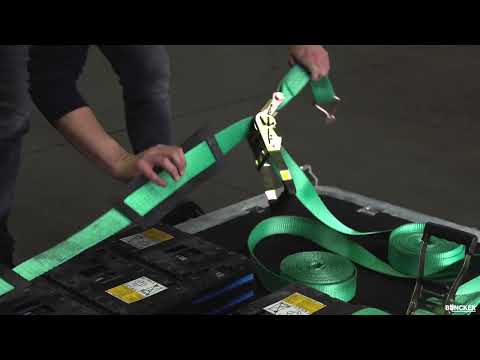
To load the container, the side panels must first be opened and the clamps released. The hood can then be lifted with a forklift. The batteries can then be placed on the base plate for loading. There is a non-conductive mat on the plate. The batteries themselves can be secured with tensioning straps (tension straps are included). The hood can then simply be put back on, the clamps closed, and the side panels folded shut. Please also refer to the instruction video in the "Downloads" tab.
The container can also be stacked during storage in order to use space as efficiently as possible.
Contents of the UN certification
UN certification is an important aspect of BUNCKER®, as it indicates that the packaging meets the safety standards established by the United Nations for the transport of dangerous goods. This certification ensures that the product has passed a fire, leakage, and drop test as well as a worst-case evaluation to ensure that it effectively contains and prevents the hazards associated with lithium batteries. The tests and evaluations demonstrate that BUNCKER® can contain thermal runaway.
If defective or damaged batteries need to be packaged, a UN approval based solely on drop and stacking tests is not sufficient. For shipping in accordance with P911/LP906, additional certification is required confirming that the packaging complies with the following parameters:
- Withstanding a worst-case scenario fire test
- No occurrence of leaks
- The container has a well-functioning gas management system
- A high heat resistance must be ensured
These criteria must be met based on the stated maximum tested kWh of the lithium-ion batteries.
Therefore, always request the approval certificates for transport according to the P911/LP906 certificate, which confirms the approved type of packaging instruction, how the batteries must be secured against slipping, how the box must be made fire-resistant, and specifies the consumption limits in kg and kWh for road (ADR), rail (RID), and sea transport (IMDG).
A copy of these certificates should be enclosed with the packaging during transport.
A safe system thanks to the patented insulation material Altilium®
The BUNCKER® Pro Line HEAVY is fully equipped with our patented Fibercon Altilium® CP Blanket (FACB). This innovative product has the potential to filter the toxic HF gases. In addition, the FACB has non-combustible, fire-resistant, and insulating properties.
BUNCKER® an environmentally friendly solution with convincing advantages
BUNCKER® packaging is known for its environmentally friendly and sustainable properties, as well as for its long service life, low total operating costs, and robustness
Environmentally friendly and sustainable
Particular emphasis was placed on environmental friendliness in the development of BUNCKER® packaging. They are made from environmentally friendly materials that minimize the impact on the environment. In addition, BUNCKER® packaging is often designed so that it can be easily recycled, thereby reducing waste and promoting a circular economy.
Long service life
BUNCKER® packaging is designed for a long service life. It is developed and manufactured with durable materials to ensure that it can withstand the rigors of transport, handling, and storage. Thanks to their long service life, BUNCKER® packaging helps reduce the need for frequent replacement and generates less waste.
Low total operating costs
BUNCKER® packaging offers cost advantages throughout its entire service life. While the initial investment may be higher compared to less durable alternatives, the longevity of BUNCKER® packaging means that it needs to be replaced less frequently. BUNCKER® can be operated by one person, and no inner packaging is required either. This reduces the overall costs associated with the procurement of packaging, storage, transport, handling, waste management, and cleaning costs.
Robustness
BUNCKER® packaging is constructed to be robust and resistant to damage. It is designed to effectively protect the contents during transport and storage and reduce the risk of product damage or spoilage. The robustness of BUNCKER® packaging contributes to its long service life and overall cost savings.
Low environmental impact
In the event of a fire, it is important to prioritize the safety of human life and property. While water is often used as a firefighting agent due to its availability and effectiveness in extinguishing fires, this is an alternative firefighting method that can minimize the impact on the environment
Transport instructions
All legal regulations, as well as any markings and labels, must be observed during transport. All handling operations and transports of the container must be carried out using suitable and operationally safe means. Before transport, it must be ensured that the hood is firmly locked to the base frame.
Repair and disposal
Damaged transport containers must not continue to be used. Repairs may only be carried out by specialists authorized by the manufacturer, or by the manufacturer itself. Contaminated components must be disposed of properly in accordance with their contamination.
Certification and guidelines
Lithium batteries fall under dangerous goods class 9. Therefore, numerous requirements and guidelines must be observed when transporting lithium batteries. The transport box has been specifically designed for the strictest safety regulations.
Certified for packaging group I
The Pro Line Heavy container meets the requirements of packaging group I, which means that substances with a high hazard potential may be transported in it. To achieve this classification, the boxes must withstand drop tests from a height of 1.8 m. All packaging with the code “X” may be used for packaging groups I (II and III).
Complies with the guidelines of ADR / packaging instruction LP 906
All lithium-ion cells or batteries and lithium-metal cells or batteries that have been damaged and no longer comply with the applicable regulations according to their manual must comply with the provisions under this special regulation. This applies, for example, to cells that have leaked or vented gas, have suffered external or mechanical damage, or have been identified as defective for safety reasons, or could no longer be diagnosed before transport. If it is also determined that the lithium-ion cells or batteries could be prone under normal transport conditions to rapid disassembly, dangerous reaction, flame formation, dangerous heat generation, or a dangerous release of toxic, corrosive, or flammable gases or vapors, these defective cells must then be transported in accordance with packaging instruction P 911 or LP 906. These packaging guidelines in turn require packaging group I.
In addition, additional testing requirements apply: During a possible accident involving the lithium-ion battery, the surface of the package must never exceed 100°C. Only short-term temperature peaks up to 200°C are permitted. No flames may form outside the package, and no fragments may escape from the package. Furthermore, the structure of the package must be maintained at all times, and a gas management system must provide pressure relief inside. Compliance with the testing requirements must be demonstrated by real fire tests
If you would like to use the container for the transport case "critically defective" according to LP 906, please feel free to contact us to obtain the corresponding approval for this transport case: info@lion-care.com or +49 7151 256 4811 .
Future-oriented
Lithium-ion batteries will become indispensable in all industrial applications in the coming years. However, improper use can result in a considerable hazard potential from the batteries during production, storage, and transport. By purchasing these boxes, you protect yourself from major financial damage right from the start.
About BUNCKER®
BUNCKER® addresses the lack of awareness and knowledge about the safe handling of lithium batteries. BUNCKER® has recognized that the regulations are complex and difficult for the user to understand and that existing solutions are not necessarily user-friendly.
BUNCKER® strives to develop solutions that improve safety and simplify the handling of lithium batteries. This includes the development of user-friendly teaching materials, safety guidelines, environmentally friendly solutions, or innovative tools and technologies for safe lithium battery management.
BUNCKER® made in Holland benefits from the country’s strong focus on innovation and sustainability. The Netherlands is at the forefront of sustainable development and offers a favorable environment for companies working on innovative solutions.
BUNCKER®, Berlin Packaging Dangerous Goods in collaboration with Lithium Safety Solutions & VDL Staalservice
At your service
Please feel free to contact us if you have any questions. We look forward to hearing from you!
| ADR special provision: | SV 376 |
|---|---|
| Areas of application: | Automotive, External storage, Fire-retardant storage, Stationary energy storage, Stationary safety container, Storage, Transport, Transport of batteries |
| Battery status: | Critically defective |
| Encoding: | 50A |
| Filling material: | Without filler material |
| Handling of filling materials: | without filler material |
| Included filler material: | without filler material |
| Material: | Steel |
| Material designation: | Galvanized steel |
| Packaging group: | I |
| Packaging instruction according to ADR: | LP906 |
| Packaging type: | Dangerous goods large-packages (LP) |
| Suitable for critically defective?: | Yes |
| Type: | Storage box |
| UN packaging code: | UN 50A/X/--**B/1655.2144-230137/1440/800 |