
B&W transport case BATTERY.CASE 908.08 Plastic container for lithium-ion batteries


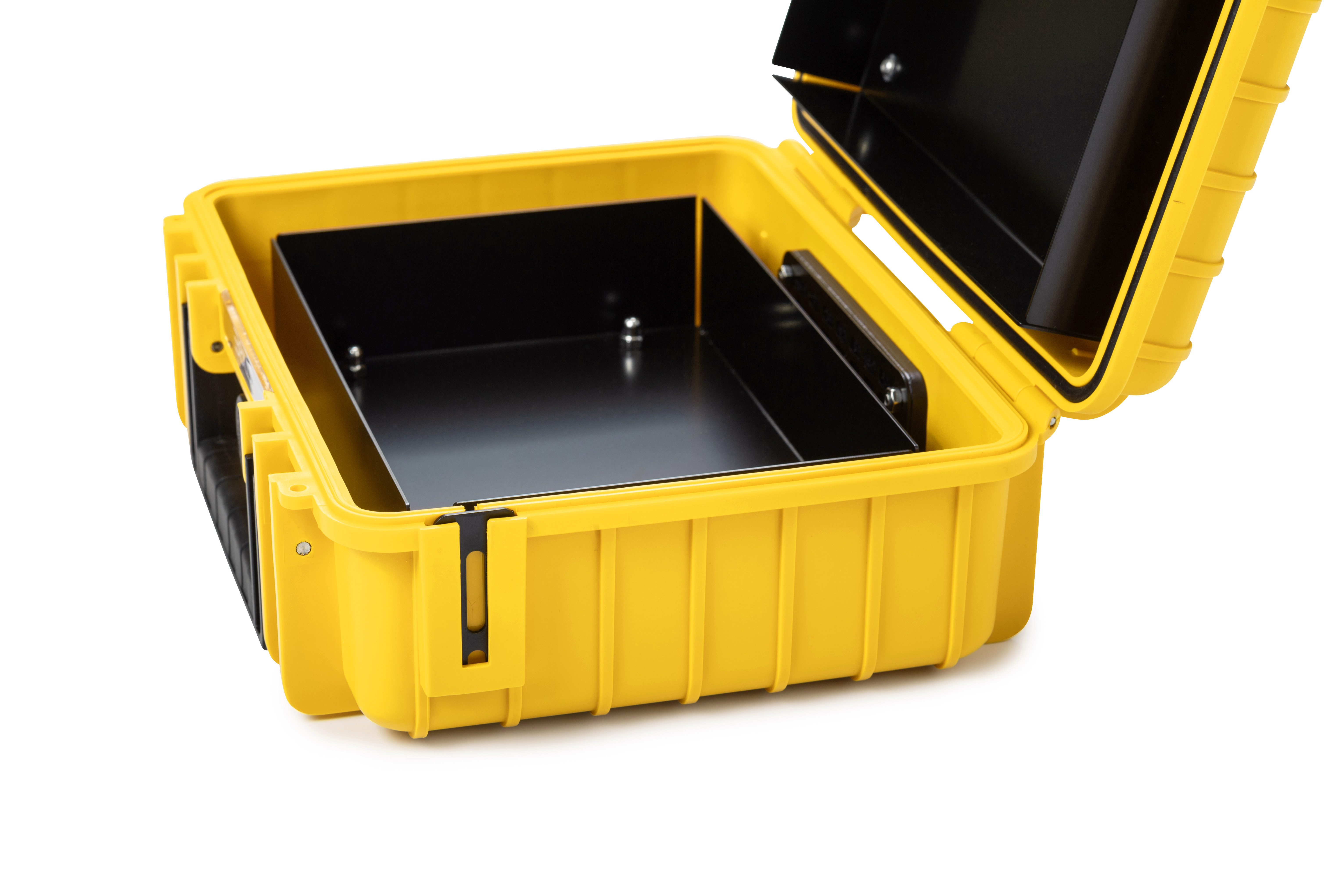



- Also for defective batteries
- Max. energy density: 1.5 kWh
- External dimensions: 270 x 215 x 105 mm
- Internal dimensions: 208 x 140 x 66 mm
- Includes fireproof bag
Do you have some questions about this product?
- Your personal contact person
- Name: Petra Fürbeck
- E-Mail: info@lion-care.com
- Phone: +49 (0) 7151 - 256 4817
Technical data
| ADR special provision: | SV 376 |
|---|---|
| Areas of application: | Batteries for mobile electronic devices, Fire-retardant storage, Garden tool batteries, Mobile phones, Model building batteries, Power tool batteries, Smartphones |
| Battery status: | New, Defective |
| Encoding: | 4H2 |
| Filling material: | Cube foam, fireproof protective bag (20 x 130 mm) |
| Included filler material: | Cube foam (cuttable) |
| Internal dimensions (mm): | 208 x 140 x 58 |
| Material: | Plastic |
| Material designation: | Polypropylene (PP) |
| Max. energy density (kWh): | 1.5 |
| Max. gross weight (kg): | 2.8 |
| Max. net cargo mass (kg): | 0,8 |
| Outer dimensions (mm): | 270 x 215 x 105 |
| Packaging group: | I |
| Packaging instruction according to ADR: | P 903, P 908 |
| Packaging type: | Dangerous goods packaging < 450 liters or < 400 kg net |
| Suitable for critically defective?: | No |
| Tipping weight (kg): | 2.25 |
| UN packaging code: | 4H2/Y2.8... |
Product information „B&W transport case BATTERY.CASE 908.08“
Businesses and private individuals are increasingly faced with the challenge of transporting or storing batteries safely. Lithium-ion batteries are always classified as dangerous goods, regardless of whether they are new, intact, used or damaged. B&W has developed this case system specifically for e-bike batteries, which, in addition to safe storage, also enables the transport of defective lithium-ion batteries in accordance with ADR regulations.
The batteries shown in the pictures are not included in the scope of delivery.
B&W battery transport case 908.08 – perfect for storing and transporting lithium-ion batteries
B&W has developed this high-quality and innovative storage and transport system for lithium-ion batteries. The inner container can be used to transport or store a lithium battery/lithium-ion battery with the substance numbers UN3480 or UN3481. This system is also recommended for private use if the batteries are to be stored for a longer period of time.
Also ideal for transporting defective batteries
In addition to the storage and transport of intact lithium batteries, the B&W battery transport case 908.08 is also
suitable for damaged cells, which pose a significant hazard during both transport and storage. This approval makes the battery case much more versatile than comparable models.
Cable feed-through allows charging in the case
An integrated cable feed-through allows charging in the case. To do this, the cable must be fed into the case when it is open. Please refer to the images.
Special design and fireproof protective bag
The B&W 908.08 battery transport case is equipped with specially developed, non-flammable padding and a fireproof protective bag measuring 20 x 13 cm. This not only allows the Li-ion batteries packed inside to be transported safely, but also acts as a fire retardant in the event of a fire. Additional extinguishing granules and extinguishing agents, such as Pyrobubbles from Genius, which are used in other battery transport containers, are therefore not necessary with the B&W Battery Transport Case 908.08. An activated carbon filter reduces the gases emitted and minimises soot formation in the event of a potential battery fire.
Battery transport box also protects against mechanical impact
In addition to providing protection against the dangers of defective batteries, the case also protects against the causes of many defective batteries – mechanical stress. It is not uncommon for a defect in a Li-ion battery to be caused by improper storage or mechanical force during transport (e.g. the battery falling to the ground from a great height); e-bike batteries in particular are more likely to fall to the ground and thus suffer potential damage.
The padding in the battery box absorbs shocks
The cube foam effectively protects the Li-ion batteries stored and transported in the B&W battery transport case 908.08 from external influences, especially mechanical ones. If the battery box containing the Li-ion batteries falls, some of the force is absorbed by the cube foam, often preventing damage to the batteries or battery cells. Accordingly, it is recommended that batteries always be stored in the battery case when not in use to ensure maximum safety.
Many possible uses for the 908.08 battery transport case from B&W
The 908.08 transport case from B&W, made of lightweight polypropylene, is ideal for a wide range of applications, for example with lithium-ion batteries for smartphones or model making.
Use of the B&W transport case in the commercial sector
Craft businesses are increasingly working with battery-powered tools – whether cordless screwdrivers, hammer drills or angle grinders, almost all tools are now available with powerful Li-ion batteries, which are much easier to handle. This case is also ideal for the safe storage of Li-ion batteries. This not only provides perfect protection for the batteries, but also for the surrounding area should the Li-ion batteries catch fire.
Unique fire protection system from B&W including activated carbon filter and fire protection bag
The fire protection system, which is unique and patented by B&W, ensures that the case closes automatically in the event of a fire inside. This means that the case also offers a high level of safety if a battery starts to burn unattended. At the same time, the case has an activated carbon filter, which reduces the gases emitted during a fire and the formation of soot. A fire protection bag measuring 20 x 13 cm is included.
Storing LiPo batteries from model making in the B&W transport case
Batteries have long been used in model making. Whereas NiCd or NiMh batteries were used in the past, Li-ion batteries and lithium polymer batteries are now generally used because the energy density of LiPo batteries is significantly higher. The B&W 908.08 battery transport case offers sufficient storage space for smaller battery cells, allowing LiPo batteries to be transported safely to their place of use and stored safely between uses.
Size and capacity of the 908.08 battery transport case from B&W
The 908.08 battery transport case from B&W has an empty weight of 2.25 kg and a maximum gross weight of 2.8 kg. The case has a maximum capacity of 1.5 kWh.
Compact dimensions with ergonomic handling
The battery container is extremely handy and flexible in use. The 908.08 battery transport case from B&W has external dimensions of 270 x 215 x 105 mm and internal dimensions of 208 x 140 x 66 mm (length x width x height), making it compact and therefore ideal for use in confined spaces. In addition, the boxes are stackable and therefore take up minimal storage space.
Battery transport case 908.08 from B&W – a safe system for you and the environment
Individual and expensive transport solutions can be replaced by using this economical and standardised product. The boxes are permanently reusable.
Certification and guidelines that the B&W transport case complies with
Lithium batteries fall into dangerous goods class 9, which means that the goods pose a risk to the environment during transport that should not be underestimated. Numerous specifications and guidelines must therefore be observed when transporting lithium batteries.
The 908.08 battery transport case is suitable for transport in accordance with SV 376 of the ADR and packaging instruction P 908
All lithium-ion cells or batteries and lithium-metal cells or batteries that have been damaged and no longer comply with the applicable regulations in accordance with their manual must comply with the provisions of Special Provision 376 (SP 376). This applies, for example, to cells that have leaked or degassed, have suffered external or mechanical damage, have been identified as defective for safety reasons, or could not be diagnosed prior to transport. These cells must then be packed in accordance with packing instruction P 908. According to this guideline, it must be ensured, for example, that any electrolyte that is released is absorbed and that a non-electrically conductive thermal insulation material protects the environment from dangerous heat build-up.
Suitable for transport by aeroplane* with eyelets for padlocks
Thanks to the automatic air pressure equalisation valve, the case is also suitable for transport by aeroplane. Two eyelets allow padlocks to be attached. However, we recommend that you clarify the packaging requirements with your air freight forwarder in advance. Please note that lithium-ion batteries exceeding 100 Wh are not permitted on passenger aircraft.
The manufacturer B&W – an institution in the field of transport cases
B&W International offers tailor-made solutions for every requirement and sets standards for reliability, quality and safety in manufacturing. With innovative and individual solutions, the cases guarantee safe and comfortable transport of high-quality contents. As a global specialist supplier, the company develops innovative products at its site in Ibbenbüren in the Münsterland region.
Future-oriented
Lithium-ion batteries will become indispensable in all industrial applications in the coming years. However, if used improperly, the batteries can pose a potential hazard that should not be underestimated during manufacture, storage and transport. By purchasing the B&W 908.08 battery transport case, you can protect yourself against major financial losses right from the start.
Working for you
Please do not hesitate to contact us if you have any questions. We look forward to hearing from you!
*Please note that certification for air transport applies exclusively to cargo flights. In addition, air transport regulations stipulate that batteries with a capacity of > 100 Wh may not be carried on passenger aircraft.
| ADR special provision: | SV 376 |
|---|---|
| Areas of application: | Batteries for mobile electronic devices, Fire-retardant storage, Garden tool batteries, Mobile phones, Model building batteries, Power tool batteries, Smartphones |
| Battery status: | New, Defective |
| Encoding: | 4H2 |
| Filling material: | Cube foam, fireproof protective bag (20 x 130 mm) |
| Included filler material: | Cube foam (cuttable) |
| Internal dimensions (mm): | 208 x 140 x 58 |
| Material: | Plastic |
| Material designation: | Polypropylene (PP) |
| Max. energy density (kWh): | 1.5 |
| Max. gross weight (kg): | 2.8 |
| Max. net cargo mass (kg): | 0,8 |
| Outer dimensions (mm): | 270 x 215 x 105 |
| Packaging group: | I |
| Packaging instruction according to ADR: | P 903, P 908 |
| Packaging type: | Dangerous goods packaging < 450 liters or < 400 kg net |
| Suitable for critically defective?: | No |
| Tipping weight (kg): | 2.25 |
| UN packaging code: | 4H2/Y2.8... |
Downloads
FAQ
That depends on various factors that need to be considered:
- size of the battery(ies)
- condition (e.g. non-critical, defective, critically defective or prototype)
- power
Transport boxes are available in many different sizes and specifications. The packaging group for which the box is suitable is indicated for each product.
Find out more in our blog article:
https://www.lion-care.com/aktuelles/blog/transportvorschriften-regeln-und-sicherheitsmassnahmen
Even if the batteries are not critical, remember to protect them from shocks and to order appropriate filling material if it is not already included in the box.
Yes. Should a battery reach a critical state and cause a fire, separating the batteries will prevent the fire from spreading and multiplying.
Generally, the insulation and protection material should line all sides of the container. The batteries are stored between individual layers.
We also have containers in our program that already have the protective material integrated into the outer wall. No further protective layer is necessary here.
The technical principles for storage and transportation solutions are very similar. The transport boxes are also subjected to extensive tests in accordance with ADR (drop test, fire test, etc.) to confirm compliance with the ADR regulations. The packaging regulations are extensive and regulated by law.
There are currently no comparable regulations for storage. Nevertheless, manufacturers of storage boxes regularly carry out appropriate tests.
The right container depends on the type and size of the battery to be shipped or stored.
If you want to learn more about battery storage and transportation, you will find the answers in our blog articles:
https://www.lion-care.com/aktuelles/blog/transportvorschriften-regeln-und-sicherheitsmassnahmen
https://www.lion-care.com/aktuelles/blog/lithium-ionen-akkus-sicherer-umgang-und-richtige-lagerung
The transportation of batteries is subject to ADR regulations.
The number, size and weight, energy density and condition of the batteries are crucial parameters for finding a suitable transport container for lithium-ion batteries. The selection process is complex and should be carried out by appropriately trained personnel. We have a trained hazardous materials officer on our team. Please feel free to contact us.
Plastic containers are cheaper but not as durable as metal containers. They are suitable, for example, for non-critical batteries, defective batteries, prototypes and end-of-life batteries. They can be used for both storage and transportation.
Metal containers are required, for example, when dealing with critically defective batteries.
The exact packaging instructions for these cases can be found in the ADR or by consulting a certified hazardous materials specialist.
To date, there are no legal requirements for the storage of lithium-ion batteries, which does not mean that they should be stored without suitable protective measures.
It is best to check with your insurer to find out which measures they recognize as suitable in the event of a claim.
For example, a suitable box could already be recognized as spatial separation.
A rough overview can be found in this VDS publication from the GDV:
https://shop. vds.de/download/vds-3103/ccb1d439-ad9d-47cb-a2b1-ace23e155610
Please also read our blog article on this topic:
https://www.lion-care.com/aktuelles/blog/lithium-ionen-akkus-sicherer-umgang-und-richtige-lagerung
That depends on various factors that need to be considered:
- size of the battery(ies)
- condition (e.g. non-critical, defective, critically defective or prototype)
- power
Transport boxes are available in many different sizes and specifications. The packaging group for which the box is suitable is indicated for each product.
Find out more in our blog article:
https://www.lion-care.com/aktuelles/blog/transportvorschriften-regeln-und-sicherheitsmassnahmen
Even if the batteries are not critical, remember to protect them from shocks and to order appropriate filling material if it is not already included in the box.
Yes. Should a battery reach a critical state and cause a fire, separating the batteries will prevent the fire from spreading and multiplying.
Generally, the insulation and protection material should line all sides of the container. The batteries are stored between individual layers.
We also have containers in our program that already have the protective material integrated into the outer wall. No further protective layer is necessary here.
The technical principles for storage and transportation solutions are very similar. The transport boxes are also subjected to extensive tests in accordance with ADR (drop test, fire test, etc.) to confirm compliance with the ADR regulations. The packaging regulations are extensive and regulated by law.
There are currently no comparable regulations for storage. Nevertheless, manufacturers of storage boxes regularly carry out appropriate tests.
The right container depends on the type and size of the battery to be shipped or stored.
If you want to learn more about battery storage and transportation, you will find the answers in our blog articles:
https://www.lion-care.com/aktuelles/blog/transportvorschriften-regeln-und-sicherheitsmassnahmen
https://www.lion-care.com/aktuelles/blog/lithium-ionen-akkus-sicherer-umgang-und-richtige-lagerung
The transportation of batteries is subject to ADR regulations.
The number, size and weight, energy density and condition of the batteries are crucial parameters for finding a suitable transport container for lithium-ion batteries. The selection process is complex and should be carried out by appropriately trained personnel. We have a trained hazardous materials officer on our team. Please feel free to contact us.
Plastic containers are cheaper but not as durable as metal containers. They are suitable, for example, for non-critical batteries, defective batteries, prototypes and end-of-life batteries. They can be used for both storage and transportation.
Metal containers are required, for example, when dealing with critically defective batteries.
The exact packaging instructions for these cases can be found in the ADR or by consulting a certified hazardous materials specialist.
To date, there are no legal requirements for the storage of lithium-ion batteries, which does not mean that they should be stored without suitable protective measures.
It is best to check with your insurer to find out which measures they recognize as suitable in the event of a claim.
For example, a suitable box could already be recognized as spatial separation.
A rough overview can be found in this VDS publication from the GDV:
https://shop. vds.de/download/vds-3103/ccb1d439-ad9d-47cb-a2b1-ace23e155610
Please also read our blog article on this topic:
https://www.lion-care.com/aktuelles/blog/lithium-ionen-akkus-sicherer-umgang-und-richtige-lagerung