

Deleting a PV storage / battery storage
With the energy transition and the increasing spread of photovoltaic systems, the corresponding battery storages are also installed more frequently in private households, allowing you to maximize self-consumption of self-generated electricity. But what happens if this catches fire? What can firefighters and professional fire brigades (NO PRIVATE INDIVIDUALS) use, is described below.
Table of contents
- PV storages with capacities between 5 and 20 kWh common in households
- How professionals extinguish a PV storage
PV storages with capacities between 5 and 20 kWh common in households
For the classic single-family house, modules with a total capacity typically between 5 and 20 kWh are used for the battery storages, with decreasing price of PV storage also increasing capacity tendentially. When comparing this power capacity with other Li-ion batteries in the household, it quickly becomes clear that the photovoltaic storages, next to the electric car, have by far the largest capacity in the household. For comparison: an e-bike battery typically reaches 0.5-0.8 kWh; lawnmower robots, battery vacuums, etc. typically have even less capacity.
High capacity of the PV storage poses dangers
 Along with the capacity of a battery comes the potential risk it presents if problems occur, e.g., if the separator is damaged. A high-performance storage battery from a PV system poses a greater danger in a fire than a comparatively small smartphone or notebook battery. At the same time, it should be noted that PV system storages are typically fixed installations, so mechanical damage (from falls, etc.) can almost be ruled out. In addition, PV storages contain mature battery management systems that provide additional safety. If a PV storage, which is often placed in basements, comes into contact with water due to flooding, a fire can still occur days later. Accordingly, a specialist should be engaged before the storage is used again. BVES safety notes provide a good guide for handling power storage systems in case of water damage and floods. The guide can be found here.
Can you delete a PV storage yourself?
The short and clear answer: No! As a private person you should never attempt to extinguish a battery storage yourself, but always call the fire department for help - similar to extinguishing an electric car. One reason is that extinguishers for PV storages are not suitable for completely extinguishing a burning battery storage. Additionally, the storage units are often in closed rooms, so the gases produced during the fire can quickly become life-threatening. Even if the PV system storage is not in a closed room, common battery extinguishers help only very limitedly. With the comparatively small capacity, fires that arise in the storages, if at all, can only be contained for a short time.
How professional fire brigades extinguish a PV storage
The most important thing first: Private individuals should never attempt to extinguish a PV storage themselves when there are problems. As soon as there are problems, unusual heat development, smoke or fumes, one should immediately call the fire department and move to safety!
Fire departments and other professional fire brigades are usually equipped with various means to extinguish a burning battery storage of a photovoltaic system. On the one hand, they have the appropriate protective gear including breathing apparatus to reach the fire source (especially if it is in enclosed spaces). On the other hand, fire brigades and professional firefighters have special extinguishing agents for battery fires to help contain the dangers. Two of these extinguishing agents, which are also used in extinguishing PV storage fires, are presented in the next two sections: extinguishing blankets for batteries and special battery extinguishers.
Foam blankets and large battery extinguishers to combat a PV storage fire
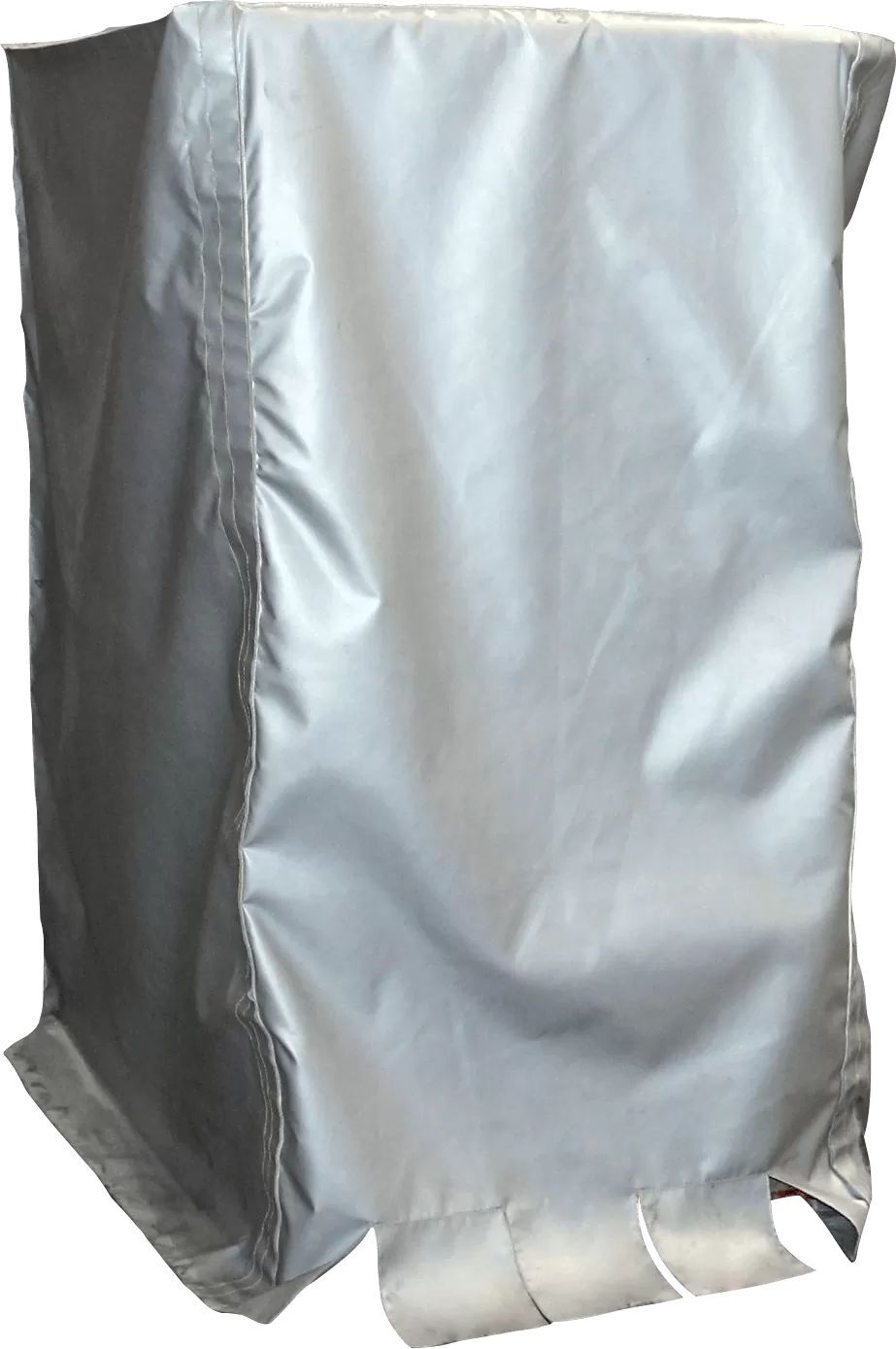 Then one can fight the fire of the PV storage with various extinguishing agents: extinguishing blankets for lithium-ion batteries, for example the Bridgehill Lithium-Fire-Blanket, which are a very good option for freestanding storages on the floor, provided the users wear appropriate protective clothing, to contain the fire and prevent spread to the surroundings. Extinguishing blankets for lattice boxes can also be an option. The VLITEX fire extingussion hood / blanket for lattice boxes is such a model that can be suitable for many PV storages. There are also 50-liter extinguishing agents for professional use that the fire department uses as an initial measure against a burning PV storage.
What do 3, 6 or 9 liter battery extinguishers achieve in extinguishing battery storages?
Extinguishing PV storages with simple battery extinguishers is not possible; primarily the smaller extinguishers with 3, 6 or 9 liters are intended for small battery fires (for example from the smartphone or the drill). If a PV system storage catches fire, you cannot do anything with these small extinguishers. At the same time, the large 50-liter models are primarily intended for professional users, so private individuals should always call the fire department in case of a PV storage fire. Attempts to extinguish with a small battery extinguisher pose more risk than benefit, as detailed in the previous section.