
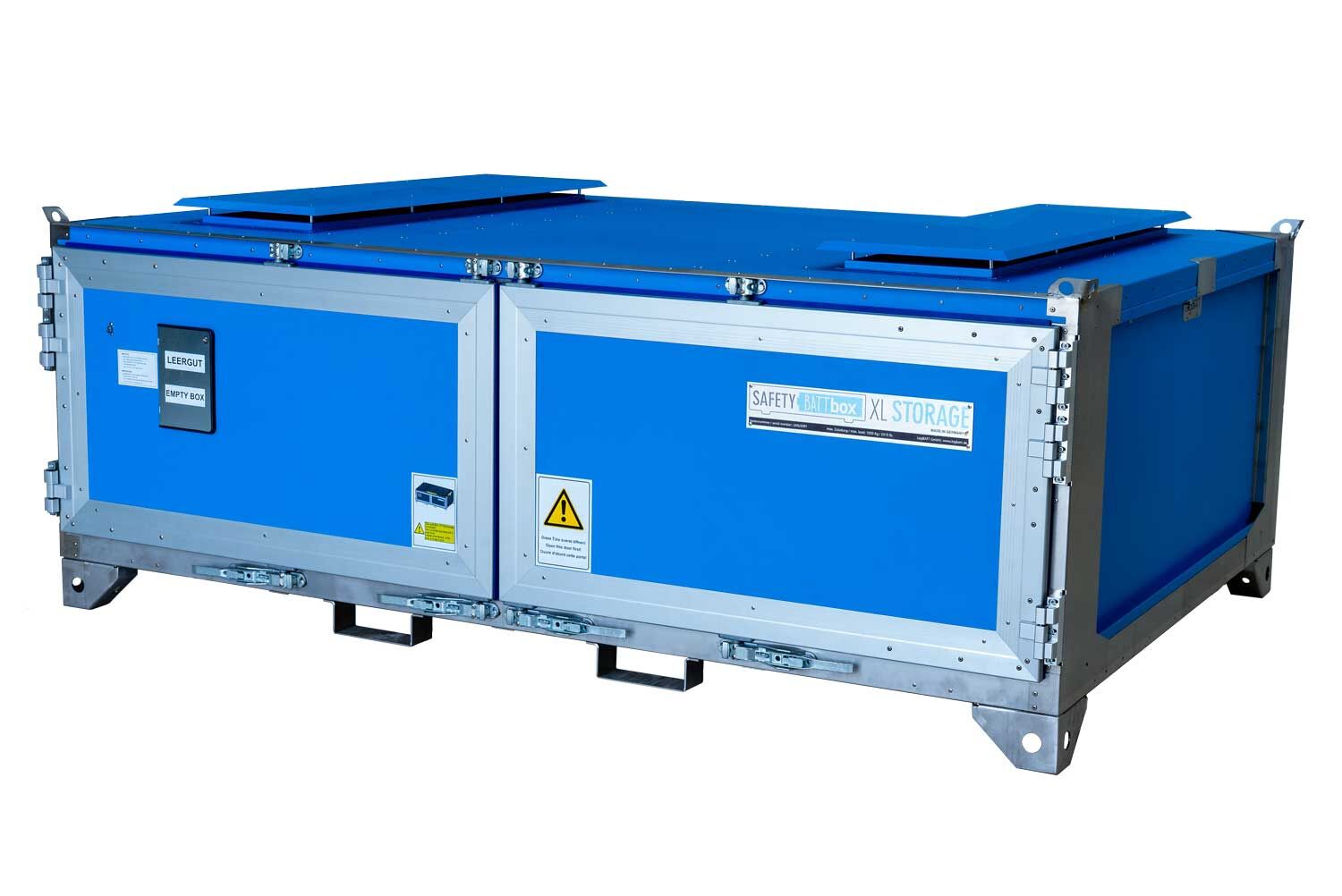
LogBATT SafetyBATTbox XL Storage
Storage container for lithium-ion batteries



incl. VAT.
Please note: Notes on delivery time
Shippingtime: 8-10 weeks
- Article no: LOGSBBXLS

Questions about the article?
Our staff member Petra Fürbeck is happy to help you:
+49 (0) 7151 - 256 4817 or info@lion-care.com
| max. gross weight (kg): | 2 200 |
| max. net dangerous goods mass (kg): | 1 050 |
| Empty weight (kg): | 1 150 |
| Material designation: | Pulverbeschichtet, galvanized, Stainless steel |
| Areas of application: | defective lithium-ion batteries, critically defective lithium-ion batteries, Storage |
| External dimensions (mm): | 2 298 x 1 237 x 3 196 |
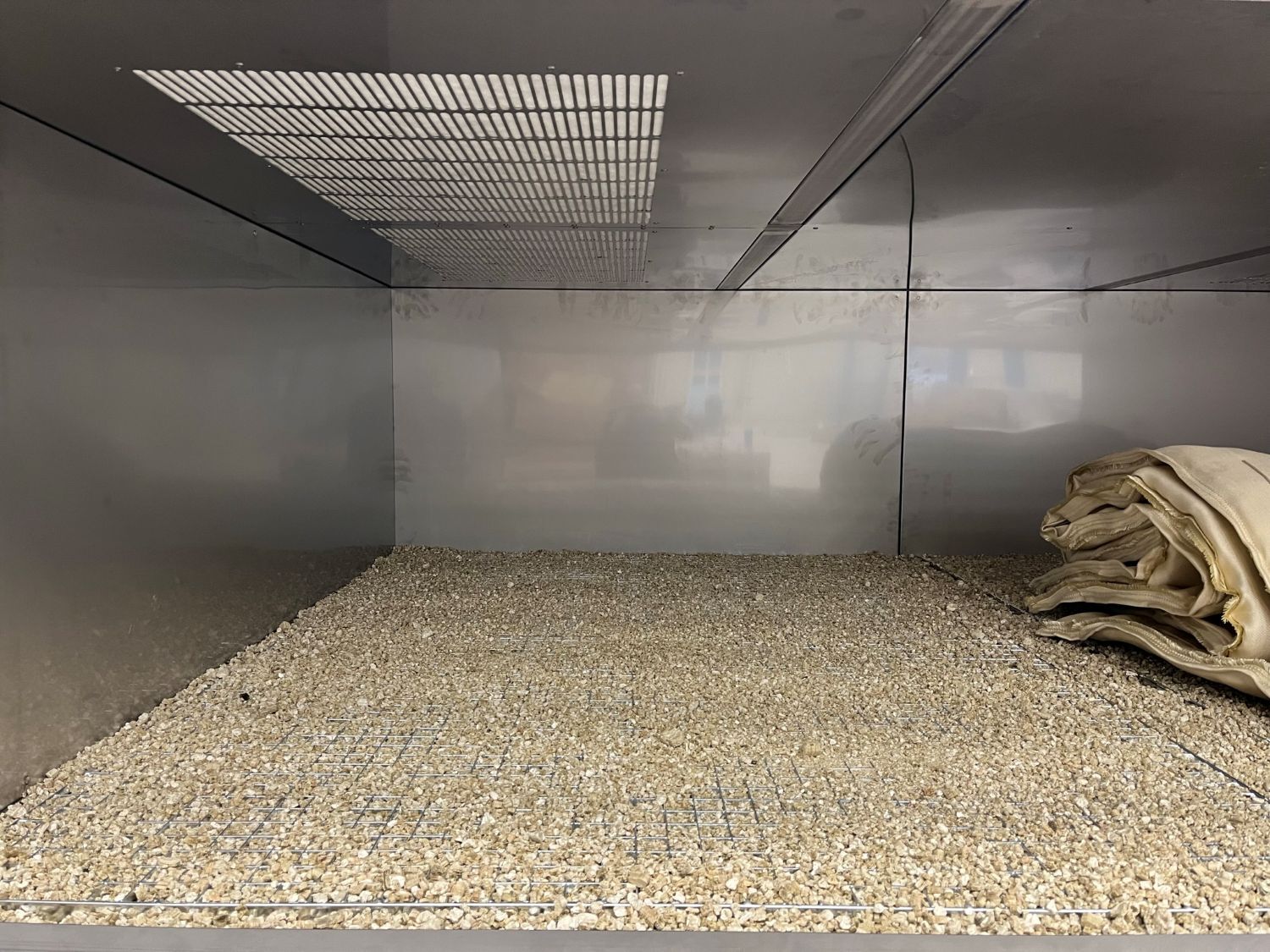
| Internal dimensions (mm): | 2 976 x 2 039 x 757 |
1. Brief overview
The SafetyBATTbox XL Storage is a compact storage container for the safe storage of lithium-ion batteries, including defective or critically defective units. It is designed for long-term storage as well as quarantine or evacuation cases and combines thermal insulation, fume management and spill containment.
2. Scope of delivery
The scope of delivery includes the following:
- SafetyBATTbox XL Storage
- Vermiculite filling for absorbing liquids (e.g. electrolyte, etc.)
- 1 x LogCOVER size XL pro (fire protection blanket with the dimensions: 3,000 x 2,000 x 25 mm)
3. Areas of application & operating conditions
The SafetyBATTbox XL Storage is suitable for:
- Lithium-ion batteries in normal, defective and critically defective condition
- Storage and quarantine of lithium-ion batteries of various sizes
- Indoor and outdoor installation on a level, ventilated surface protected from the weather
- Areas of application in industry, automotive, energy suppliers, research/development, etc.
4. Technical data SafetyBATTbox XL Storage
|
External dimensions (L × W × H) |
3 196 × 2 298 × 1 237 mm |
|
Internal dimensions (L × W × H) |
2 976 × 2 039 × 757 mm |
|
Empty weight |
approx. 1 150 kg |
|
Max. Payload |
1 050 kg |
|
Body material |
Galvanized steel |
|
Gas management system |
integrated |
|
Stackability |
1 + 1 (unloaded) |
|
Loading |
Front loading |
5. Safety features
- Thermal insulation - fire and projectile effects are contained in the container (when used as intended).
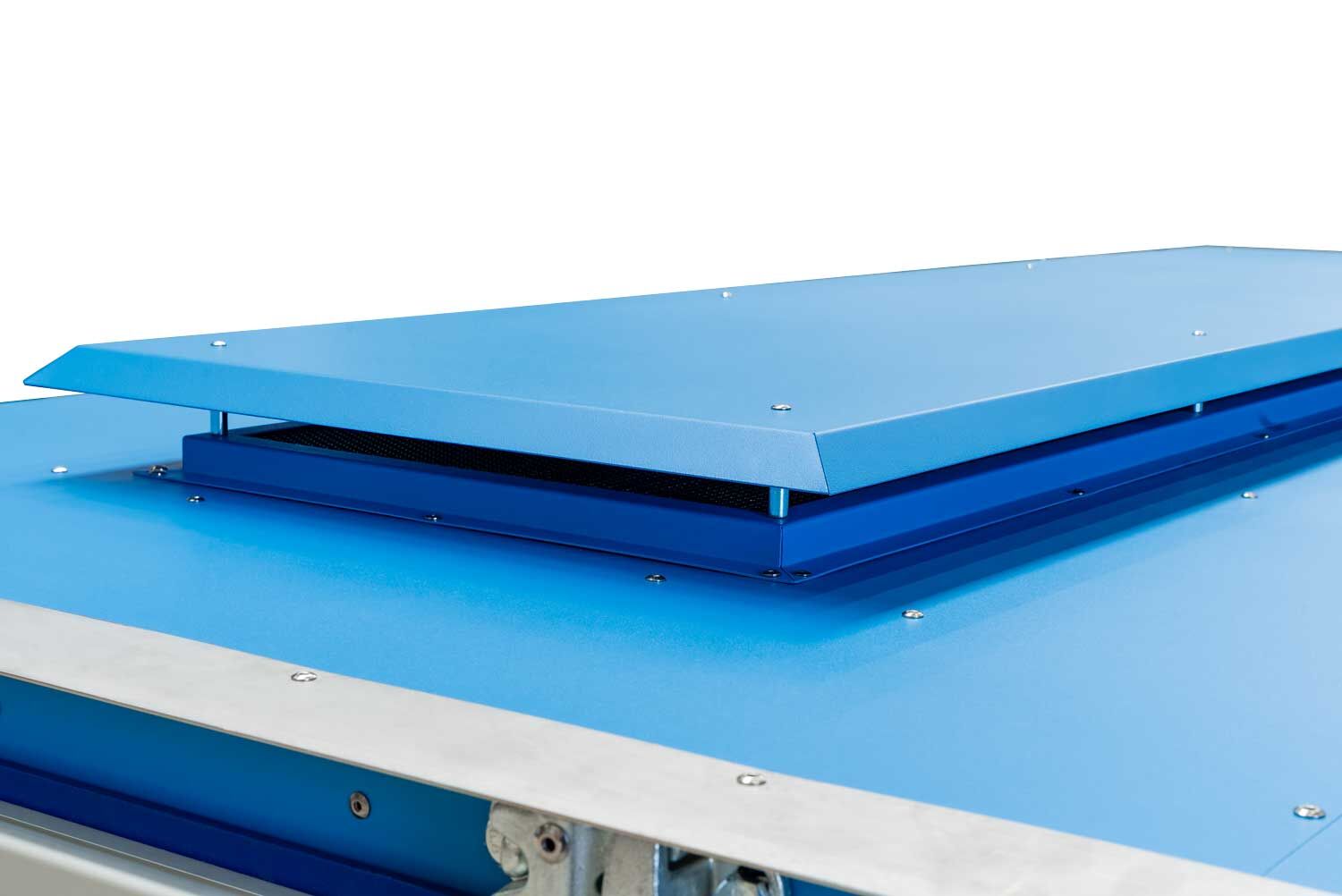
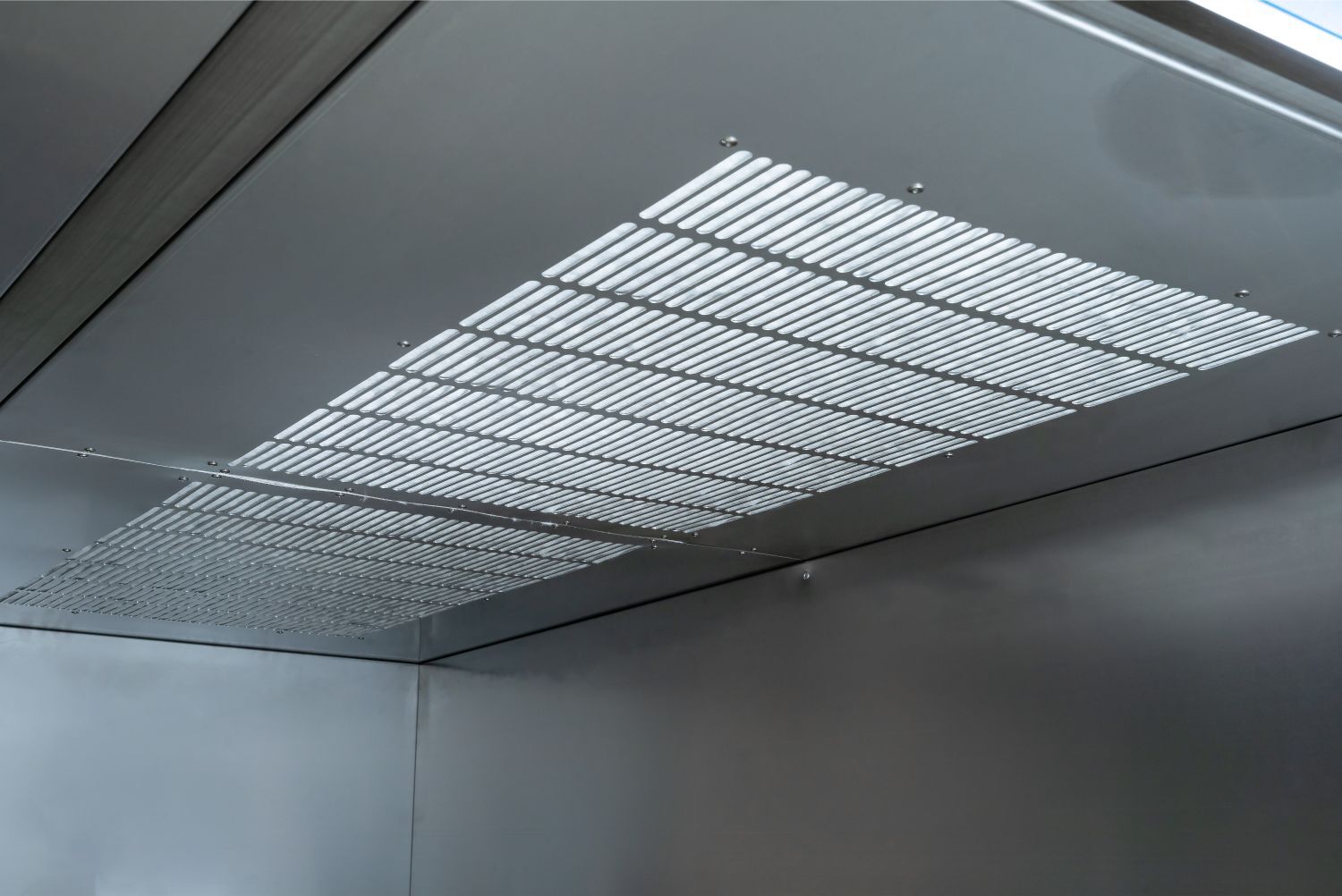
- Gas management system - Special routing of gases to reduce pressure and hazard.
- No extinguishing water required - The container is designed to contain thermal events without external cooling.
- Robust materials - Galvanized steel for long, corrosion-free operation.
6. Filling materials
- Absorption material for liquids
- LogCOVER XL pro
7. Instructions for use & operation
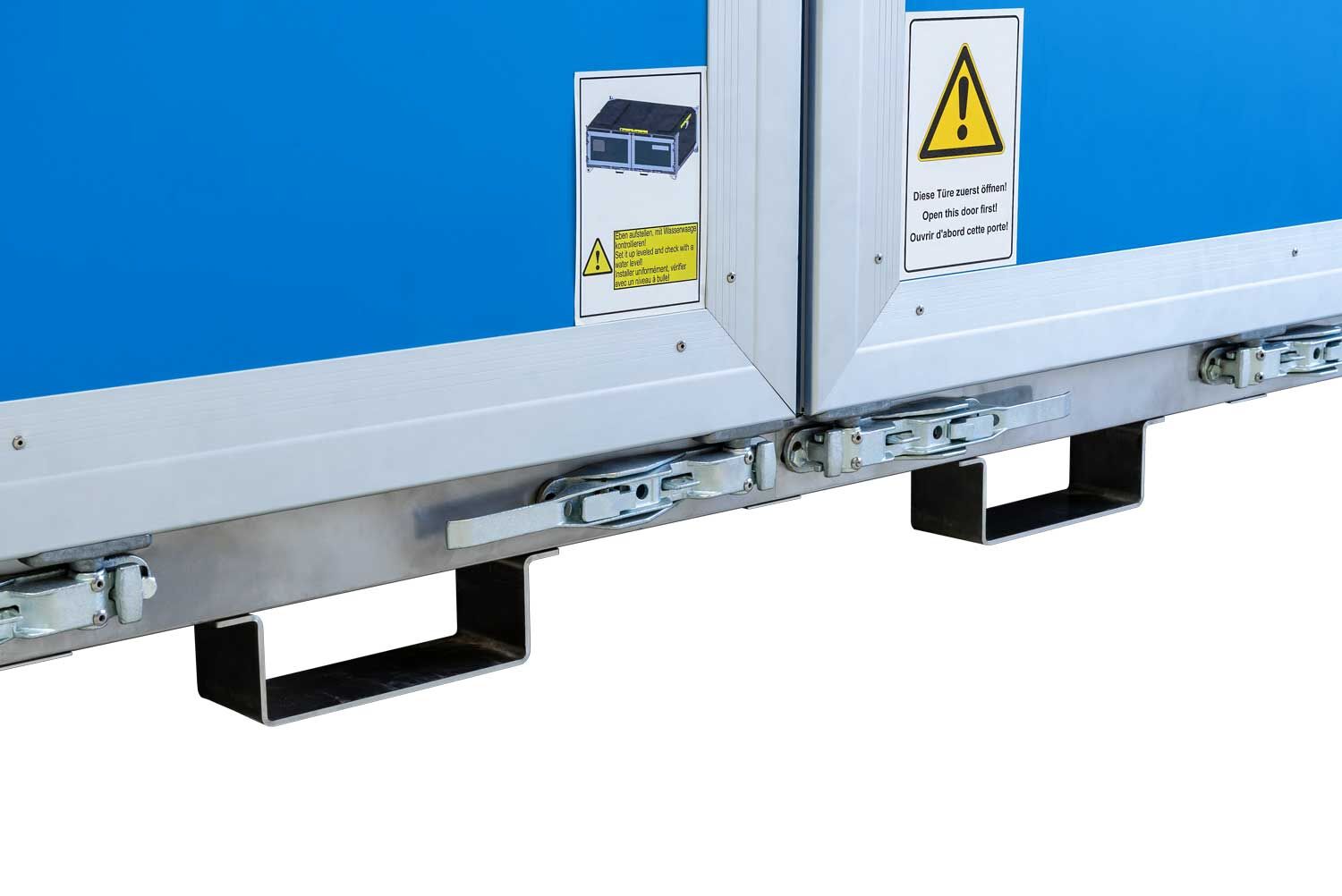
- Safety: Only to be handled by trained personnel wearing PPE (hard hat, visor, gloves, safety shoes, arc-resistant protective clothing).
- Stackability: Stackable, taking into account the maximum payload.
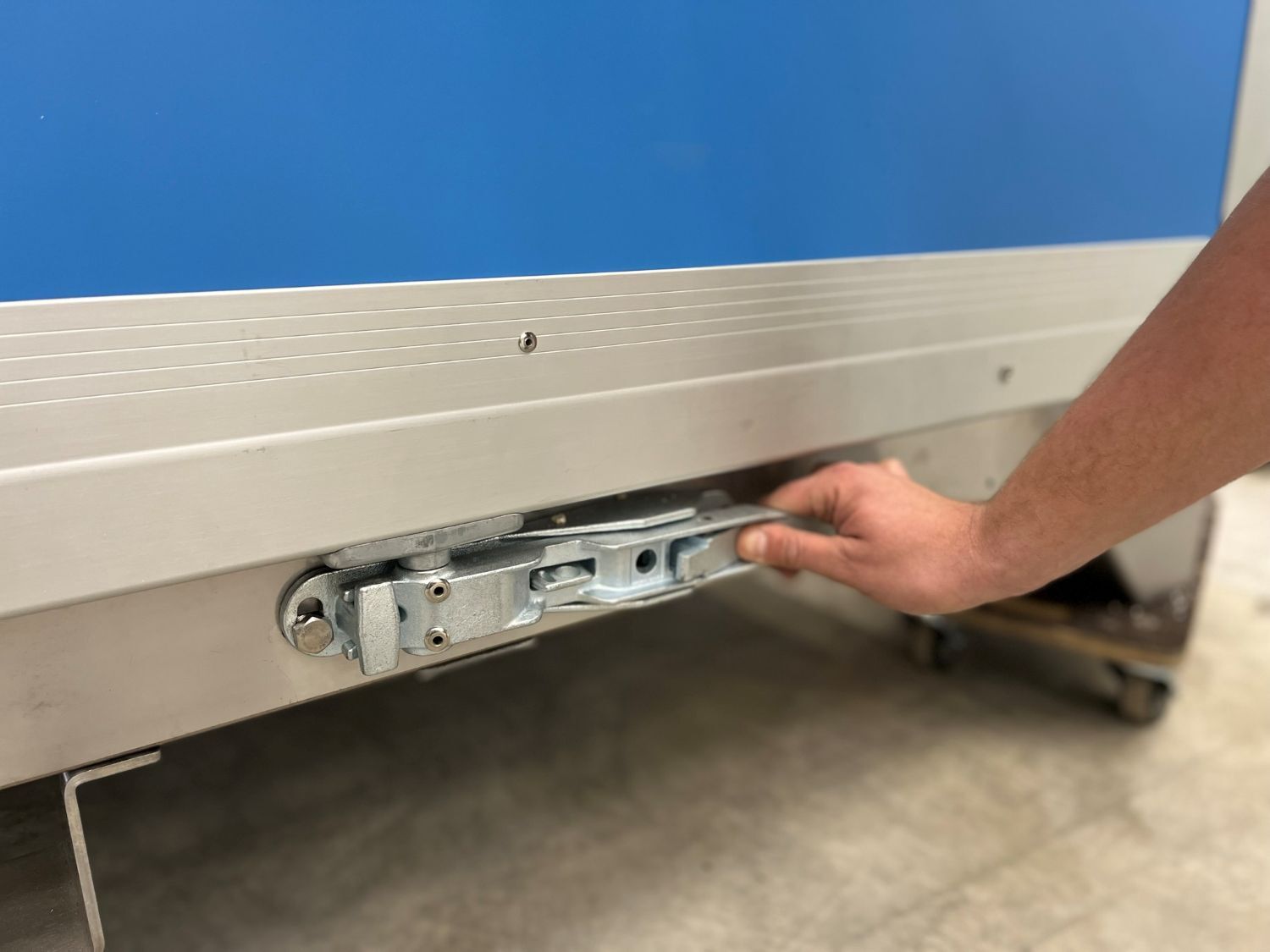
- Loading: Can also be loaded from the front with industrial trucks
- Internal transportation: Can only be moved when empty (rollers, pallet trucks, industrial trucks).
- Ambient temperature: Observe the storage conditions recommended by the battery manufacturer.
8.variants / model overview of the STORAGE family
|
Feature |
M Storage |
L Storage |
XL Storage |
|
External dimensions (L x W x H) |
1000 x 600 x 700 mm |
1606 x 1200 x 964 mm |
3196 x 2298 x 1237 mm |
|
Internal dimensions (L x W x H) |
816 x 416 x 306 mm |
1312 x 913 x 472 mm |
2976 x 2039 x 757 mm |
|
Material |
Galvanized steel |
Anodized aluminium, galvanized stainless steel |
Galvanized stainless steel, powder-coated |
|
Max. Load capacity |
80 kg |
350 kg |
1050 kg |
|
Unladen weight |
approx. 100 kg |
approx. 385 kg |
approx. 1150 kg |
|
Max. Total weight |
180 kg |
735 kg |
2200 kg |
|
optional accessories |
Roller chassis |
Set of swivel castors with brakes |
Grid inside 1 400 x 1 000 mm |
9. Future-oriented
The SafetyBATTbox XL Storage offers a compact and technically equipped solution for the safe storage of lithium-ion batteries in stationary applications. Thanks to its design and integrated gas management system, it supports the controlled and compliant handling of energy storage units in storage and quarantine areas.
10. In use for you
If you have any questions, please do not hesitate to contact us. We look forward to hearing from you!
| max. gross weight (kg): | 2 200 |
| max. net dangerous goods mass (kg): | 1 050 |
| Filling material supplied: | Vermiculite (bulk material), Vermiculite (filling cushion) |
| Type: | Storage box |
| Suitable for critically defective?: | Yes |
| Empty weight (kg): | 1 150 |
| Material designation: | Pulverbeschichtet, galvanized, Stainless steel |
| Areas of application: | defective lithium-ion batteries, critically defective lithium-ion batteries, Storage |
| External dimensions (mm): | 2 298 x 1 237 x 3 196 |
| Internal dimensions (mm): | 2 976 x 2 039 x 757 |

That depends on various factors that need to be considered:
- size of the battery(ies)
- condition (e.g. non-critical, defective, critically defective or prototype)
- power
Transport boxes are available in many different sizes and specifications. The packaging group for which the box is suitable is indicated for each product.
Find out more in our blog article:
https://www.lion-care.com/aktuelles/blog/transportvorschriften-regeln-und-sicherheitsmassnahmen
Even if the batteries are not critical, remember to protect them from shocks and to order appropriate filling material if it is not already included in the box.
Yes. Should a battery reach a critical state and cause a fire, separating the batteries will prevent the fire from spreading and multiplying.
Generally, the insulation and protection material should line all sides of the container. The batteries are stored between individual layers.
We also have containers in our program that already have the protective material integrated into the outer wall. No further protective layer is necessary here.
The technical principles for storage and transportation solutions are very similar. The transport boxes are also subjected to extensive tests in accordance with ADR (drop test, fire test, etc.) to confirm compliance with the ADR regulations. The packaging regulations are extensive and regulated by law.
There are currently no comparable regulations for storage. Nevertheless, manufacturers of storage boxes regularly carry out appropriate tests.
The right container depends on the type and size of the battery to be shipped or stored.
If you want to learn more about battery storage and transportation, you will find the answers in our blog articles:
https://www.lion-care.com/aktuelles/blog/transportvorschriften-regeln-und-sicherheitsmassnahmen
https://www.lion-care.com/aktuelles/blog/lithium-ionen-akkus-sicherer-umgang-und-richtige-lagerung
The transportation of batteries is subject to ADR regulations.
The number, size and weight, energy density and condition of the batteries are crucial parameters for finding a suitable transport container for lithium-ion batteries. The selection process is complex and should be carried out by appropriately trained personnel. We have a trained hazardous materials officer on our team. Please feel free to contact us.
Plastic containers are cheaper but not as durable as metal containers. They are suitable, for example, for non-critical batteries, defective batteries, prototypes and end-of-life batteries. They can be used for both storage and transportation.
Metal containers are required, for example, when dealing with critically defective batteries.
The exact packaging instructions for these cases can be found in the ADR or by consulting a certified hazardous materials specialist.
To date, there are no legal requirements for the storage of lithium-ion batteries, which does not mean that they should be stored without suitable protective measures.
It is best to check with your insurer to find out which measures they recognize as suitable in the event of a claim.
For example, a suitable box could already be recognized as spatial separation.
A rough overview can be found in this VDS publication from the GDV:
https://shop. vds.de/download/vds-3103/ccb1d439-ad9d-47cb-a2b1-ace23e155610
Please also read our blog article on this topic:
https://www.lion-care.com/aktuelles/blog/lithium-ionen-akkus-sicherer-umgang-und-richtige-lagerung